
Our History
The Caspar Water System has roots dating back to the town's origins as a lumber community in the mid-19th century. Caspar grew around the Caspar Lumber Company, which operated until 1955.
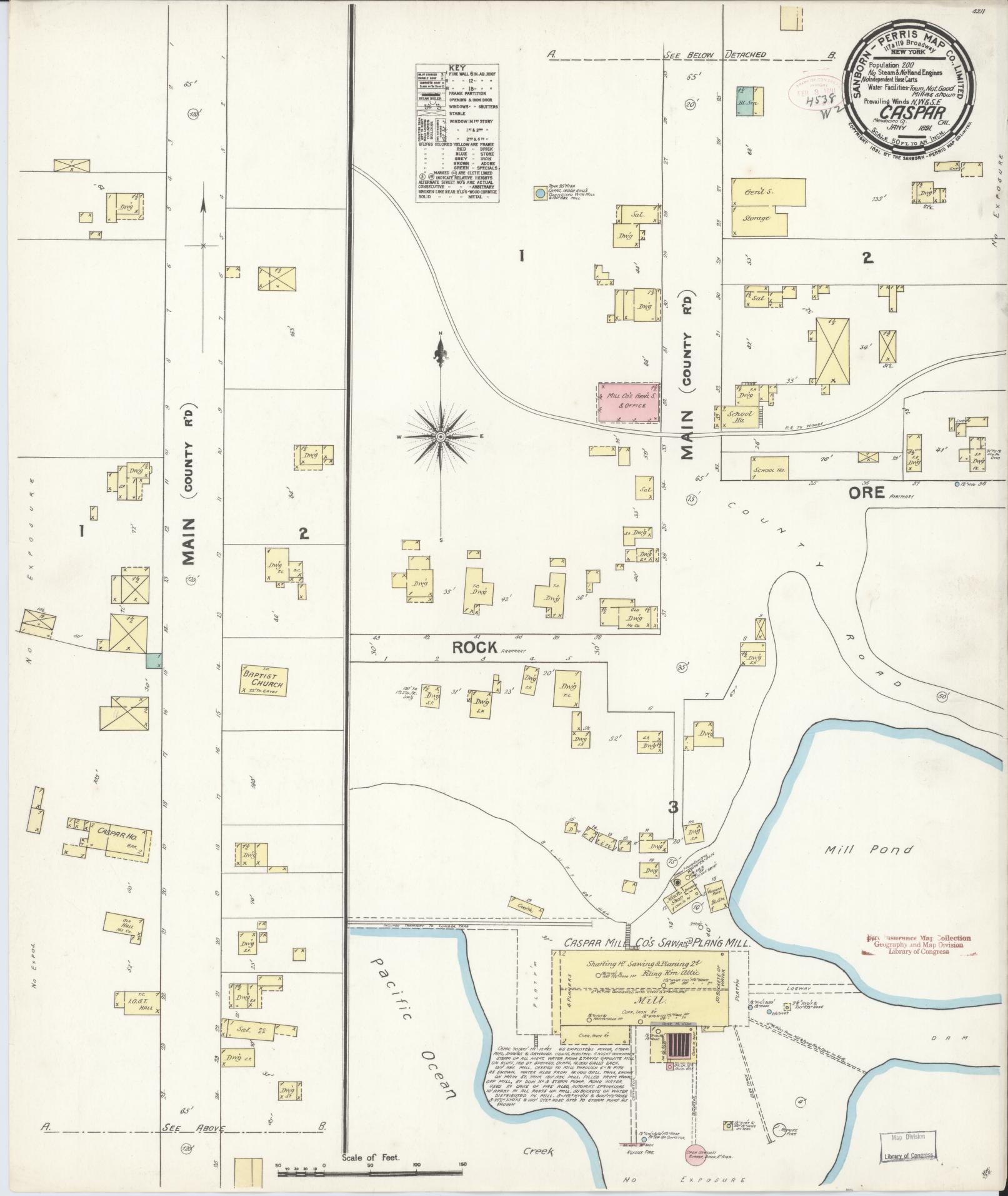
In its heyday, Caspar was a thriving company town on the Mendocino coast, with a sawmill, railway system, and infrastructure to support its workers. The water system developed during this period served the community's growing needs.
Over the decades, our water system has evolved through a number of ground water and surface water sources. Long-time residents still recall the prominent three-level water tower that once stood as a landmark in the community.
When the lumber mill closed, many of the town's original structures were dismantled, but the water system infrastructure remained and continued to develop to serve the changing community. Today's water system is classified as a County "small water system", serving a community with fewer than 15 connections.
The Caspar duck pond, across Fern Creek Road from our former water trucking station, serves as a year-round reminder of Caspar's reputation for being wet. Many on the coast still remember the drought of 1975, recalling how Caspar gave away water that summer.
Mendocino village was impacted by the drought of 1975 and in the 1980s the MCCSD performed a conjunctive use study in Caspar studying the potential to pipe water from Caspar to Mendocino. We are fortunate to have a copy of the report. As indicated in the report, Caspar is lucky that scientists with the Jackson Demonstration State Forest (originally Caspar Lumber territory) have been studying our watershed for decades.
Until 2010, the Caspar water system operated a trucking station from a second well near Highway 1, but the system did not have sufficient treatment and was closed by the California division of drinking water. Today, the former trucking station and well are being used for goat farming.